
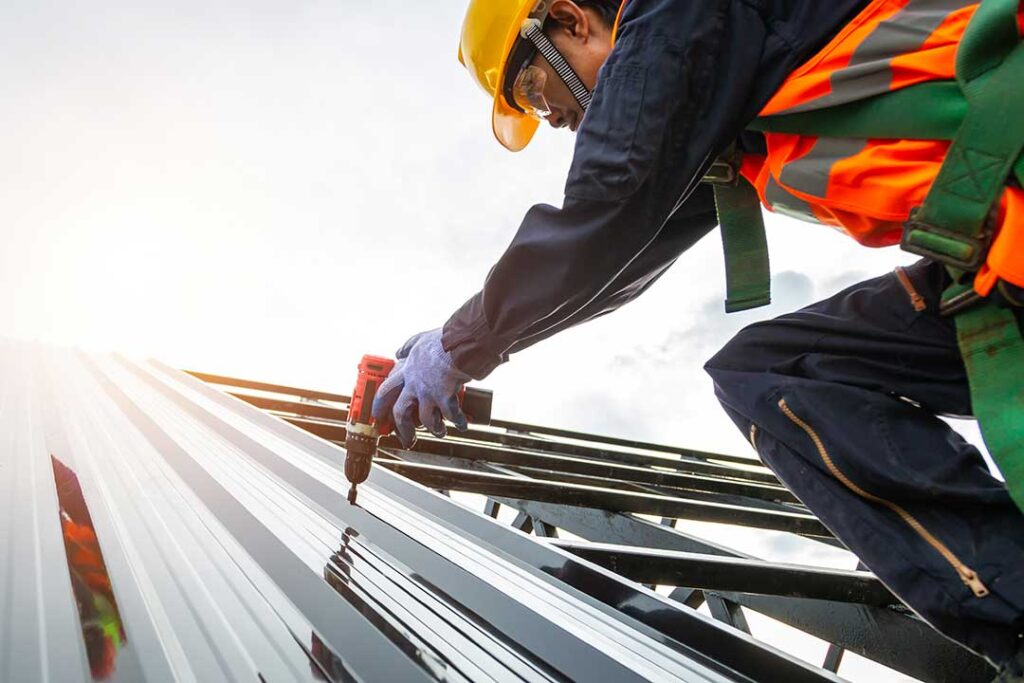
Roof decking is the structural surface installed over a home’s roof framing and beneath the underlayment and shingles. In Apalachin, NY, this layer must handle seasonal moisture, snow, ice, wind, temperature changes, and the everyday movement of the roof system.
Although decking is usually hidden from view, its condition affects the roof’s strength, appearance, ventilation, and ability to keep water out. Understanding what it does can help homeowners recognize warning signs and make sense of inspection findings.
What is roof decking?
Roof decking, sometimes called roof sheathing, is the broad panel material fastened across the rafters or roof trusses. It creates a continuous surface for the underlayment and roofing material.
Modern homes commonly use:
- Plywood
- Oriented strand board, often called OSB
- Tongue-and-groove structural panels in some roof designs
- Older board-style sheathing made from individual wood planks
The decking is not the same as the shingles. Shingles form the weather-exposed outer layer, while decking provides the underlying support. Between those layers are usually an underlayment and, in many roof systems, flashing around areas such as chimneys, walls, valleys, and roof penetrations.
Why does roof decking matter?
The decking distributes the weight of the roof covering across the framing and helps maintain the roof’s shape. It also provides a stable surface for attaching underlayment and shingles.
Damaged decking can lead to problems that are more serious than a rough-looking roof. If panels soften, sag, or lose their attachment to the framing, the roof may no longer support roofing materials properly. Fasteners may pull out, shingles may appear uneven, and water may find pathways into the attic.
The decking also influences how the roof performs during changing weather. Moisture that enters through damaged flashing, worn shingles, ice-related openings, or inadequate ventilation can eventually affect the wood below.
What materials are used for decking?
Plywood and OSB are the most common materials in newer construction. Both can perform well when properly sized, fastened, protected from long-term moisture, and supported by sound framing.
Plywood is made from thin wood layers bonded together. Its construction gives it a relatively consistent structure, although prolonged wetting can still cause swelling, delamination, or decay.
OSB is made from compressed wood strands bonded with resins. It is widely used because it provides efficient structural coverage. Repeated wetting and drying, especially at exposed panel edges, may cause swelling or deterioration.
Older homes may have plank decking instead of large panels. These boards can remain serviceable for many decades, but gaps, splits, rot, or movement may affect the installation of newer roofing materials. A roofing system built over older boards may require different fastening methods than a system installed over modern panels.
How can homeowners recognize damaged decking?
Some decking problems are visible from the attic or from the roof surface, while others are discovered only when roofing materials are removed.
Warning signs may include:
- A soft or springy area underfoot during a roof inspection
- Sagging between rafters or trusses
- Dark staining, mold-like growth, or water marks in the attic
- Wood that crumbles, feels spongy, or shows fungal decay
- Shingles that appear wavy, uneven, or depressed
- Nail heads that no longer hold firmly
- Repeated leaks in the same general area
- Ceiling stains that return after repairs
A ceiling stain does not automatically mean the decking is rotten. Water can travel along rafters, insulation, or underlayment before appearing indoors. The visible stain may be several feet away from the actual entry point.
Similarly, not every dark mark indicates active decay. Dust, old staining, and surface discoloration can look similar. The condition of the wood—especially its firmness, texture, and moisture level—is more useful than color alone.
What causes roof decking to deteriorate?
The most common cause is repeated or prolonged moisture exposure. A small roof leak may not create immediate structural damage, but continued wetting can weaken wood over time.
Common sources include:
- Missing, cracked, or displaced roofing materials
- Failed flashing around roof openings
- Ice buildup that allows water to move beneath the roof covering
- Condensation caused by warm, moist attic air
- Blocked or poorly arranged attic ventilation
- Gutters or drainage details that allow water to back up near the roof edge
- Wind damage that exposes underlayment or decking
- Improperly sealed penetrations
In a four-season climate, repeated freeze-thaw cycles can enlarge small openings. Snow that remains on a roof for extended periods can also reveal weak points in flashing, ventilation, or drainage. The roof covering may appear mostly intact while moisture is gradually affecting the layer beneath it.
Does every roof replacement require new decking?
No. Roof decking does not need to be replaced simply because the shingles are being replaced. If the panels are dry, firm, properly attached, and structurally sound, they may remain in place.
Replacement is more likely when decking is:
- Rotten or soft
- Severely swollen
- Delaminated or breaking apart
- Sagging between framing members
- Split in a way that affects fastening
- Missing where a proper structural surface is required
- Too damaged for roofing fasteners to hold securely
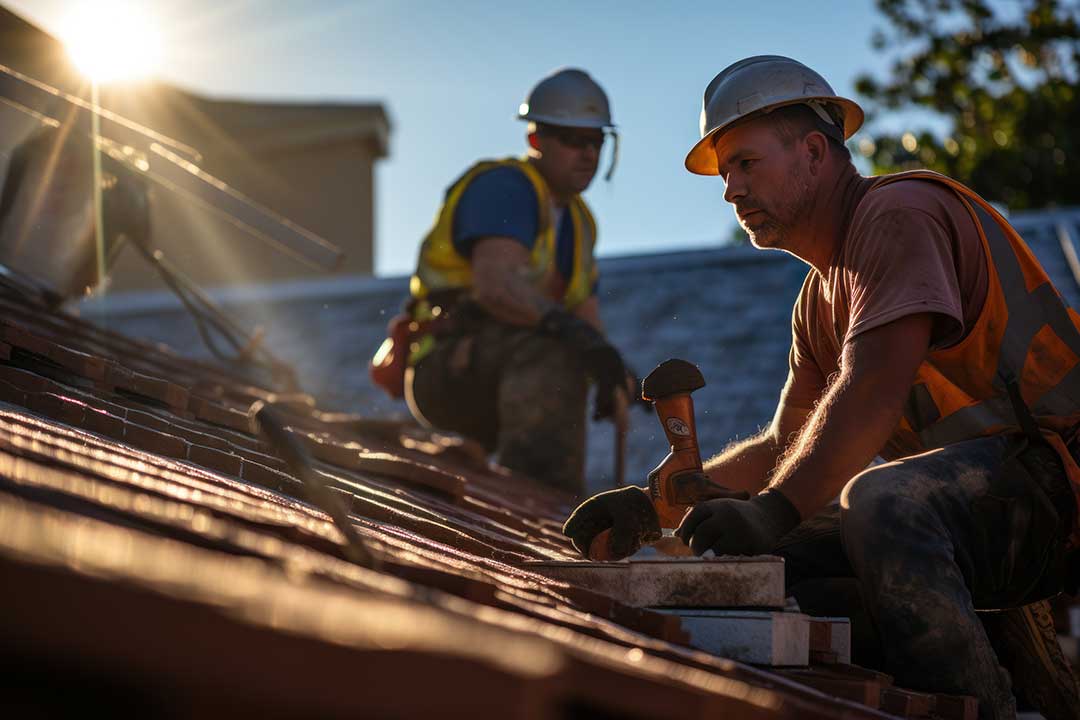
Localized replacement may be enough when damage is limited to a few areas. More extensive replacement may be necessary when a long-standing leak, poor ventilation, or widespread moisture exposure has affected multiple sections.
A useful question during any roofing project is whether the decking will be evaluated after the existing roof covering is removed. The condition cannot always be confirmed accurately from the exterior before removal.
Can new shingles be installed over damaged decking?
Roofing materials should not be installed over decking that cannot securely support them. Shingles may conceal the problem temporarily, but they cannot restore the structural strength of soft or deteriorated panels.
Installing over weak decking can create several concerns:
- Fasteners may not penetrate and hold properly
- The roof surface may remain uneven
- Damaged areas may continue to sag
- New leaks may develop around weak points
- Future repair work may become more complicated
The exact repair approach depends on the type of decking, the extent of damage, the roof framing, and applicable building requirements. Structural or hazardous conditions should be evaluated by a qualified roofing or building professional, particularly when someone must walk on the roof or enter a confined attic space.
How is roof decking inspected?
An inspection commonly includes both the roof exterior and the attic, when the attic is safely accessible. From the exterior, an inspector may look for uneven planes, sagging, exposed fasteners, shingle irregularities, and signs of moisture entry.
Inside the attic, useful observations include:
- Water staining beneath roof penetrations
- Damp insulation
- Soft or discolored wood
- Daylight visible through unintended openings
- Condensation on nails or roof framing
- Signs that ventilation is restricted
- Areas where the decking appears bowed
A more complete evaluation may occur during roof replacement, after the shingles and underlayment have been removed. That is often the first opportunity to see the full decking surface and determine whether individual panels or boards need repair.
What should homeowners ask about decking repairs?
Clear documentation helps prevent confusion. Useful questions include:
- Which areas of decking show damage?
- Is the issue active moisture, old staining, structural deterioration, or a combination?
- How many panels or boards are affected?
- Will replacement material match the required thickness and structural rating?
- How will the repaired area be fastened to the framing?
- Will the source of moisture be corrected?
- Are ventilation or flashing changes needed to reduce recurrence?
The central issue is not whether every piece of old decking looks new. It is whether the roof deck is dry, stable, properly supported, and capable of holding the roof system securely through the area’s wet, snowy, and changing seasons.
